
We don’t need fixing
Most of us are responding to wounds, expectations, and systems that shaped us long before we had the language to question them. Seeing that clearly can soften self-blame and create space for change.
Healing happens in relationship
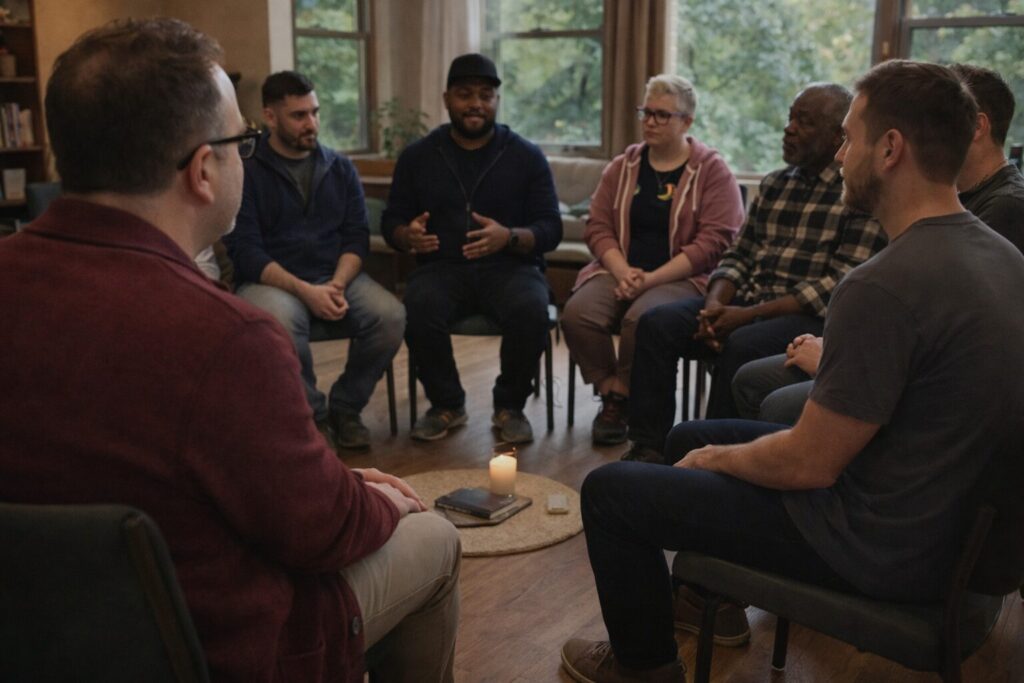
Many of us learned that strength means figuring everything out alone. But people often change most deeply when they are seen, witnessed, and allowed to be imperfect.
Parenting asks us to grow, too
Children do not only need our care—they often call us into deeper honesty, patience, repair, and self-understanding. Parenting can surface old wounds, inherited patterns, and tender questions about the kind of person we want to be. Part of this work is making space for that growth.
Our struggles make sense
There is wisdom in our patterns—even in the ways we sometimes act out against ourselves or others. Understanding those patterns makes new choices possible.
We need to meet our harsh inner-critic
For many of us, a harsh inner voice formed when being ourselves wasn’t safe. Part of this work is learning to meet those places with care instead of attack.
Grief is also central to this work
Not only grief for what we’ve lost, but grief for what was never allowed or safe to feel. As Francis Weller teaches, grief keeps us connected to love—and when welcomed, it can open meaning and belonging.
Accountability and compassion can coexist
We can harm each other, and growth often requires facing difficult truths. But responsibility doesn’t require humiliation or disposability. Repair becomes possible when people are challenged and still held as human.